Woodland walks and why dogs love them
Ask a dog where they would like to go, and a good number would say the woods. Here is why they are so good, and how to enjoy them without upsetting the wildlife.
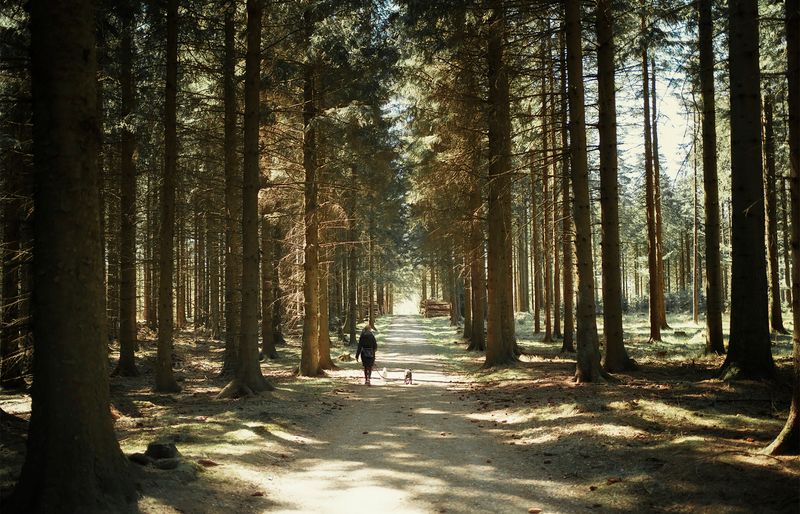
There is a particular face a dog makes in a wood. Nose down, ears up, tail going. They have walked into a library of smells, and they intend to read every book.
We think woods are one of the best places to walk with a dog, particularly for owners who like a quiet, tree-lined stroll. They need a little care, though, so we have put together our favourite tips.
Why dogs love woodland
Dogs experience the world through their noses, and woods are packed with scent. Leaves, bark, soil, mushrooms, other animals passing by. It is a lot to take in, and sniffing is hard mental work. A good woodland walk often tires a dog out more than a faster walk along a pavement.
- Rich smells: every tree trunk has a story, and every puddle has an opinion.
- Soft ground: forest tracks are kinder on paws and joints than hard pavements.
- Shade and shelter: useful in summer, and a bit of windbreak in autumn and winter.
- Variety: logs, slopes, streams and twists in the path keep a dog interested.
- Space: many woods have wide tracks and clearings where dogs can stretch their legs.
Finding a good wood
The UK has a huge number of woods, and many of them are open to walkers. Forestry England looks after large woodland sites, and the Woodland Trust manages many more across the country, as well as smaller local woods that are easy to overlook.
Start by looking at Forestry England and the Woodland Trust websites to find sites near you. Each site usually has a page with information about parking, dog rules and any seasonal notes. We do not quote details here, because they change.
Nesting season and wildlife
Woods are homes, so we are visitors. In spring and early summer, many birds nest on or near the ground, and dogs running through undergrowth can disturb them without meaning to. Keep to the paths during the nesting season, and keep your dog close.
The same goes for deer. Even a friendly chase can frighten them, and deer can injure a dog. If you see deer, put your dog on a lead calmly and move away. Never let your dog chase, even if you are sure they will not catch anything.
Livestock and gates
Some woods have grazing animals, or sit beside fields with cattle and sheep. Check before you let your dog off, and keep them on a lead whenever animals are about. If cattle approach, stay calm, walk away and let go of the lead if you need to.
Other woodland users
Woods are shared with runners, cyclists, horse riders and families. Call your dog back when you see someone approaching, and give horses plenty of room. A friendly dog still looks like a lot of dog to someone who is nervous.
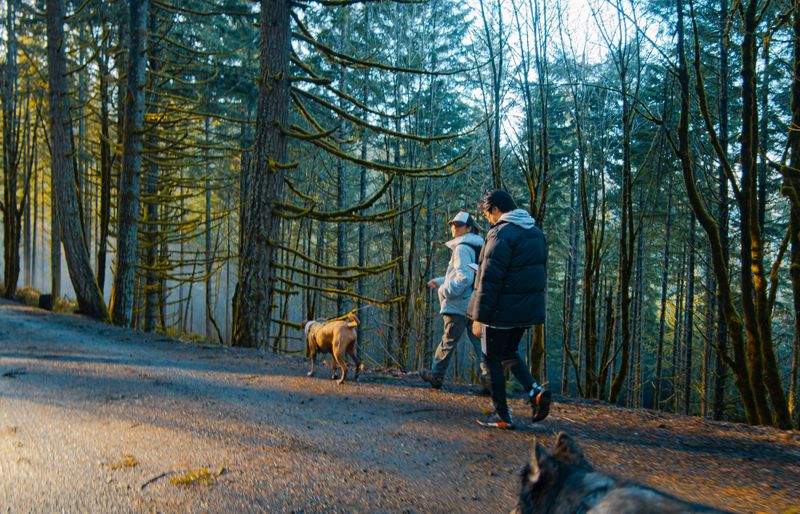
Autumn is a good time, with a few things to watch
Right now, as we write this, the woods are beginning to turn gold and brown. It is arguably the best season for a dog walk, with cool air and a lovely crunch underfoot.
Autumn does bring a few extras to keep an eye on.
- Fungi: many mushrooms are harmful if eaten. If your dog likes to snack, use a lead, and call your vet if they do eat something suspicious.
- Conkers and acorns: both can upset a dog's tummy, and conkers are best left alone.
- Leaf litter: hides holes, roots and sticks. Watch for tripping, especially with seniors.
- Ticks: active in warm, damp weather and common in leafy places. Check your dog after every woodland walk.
- Shorter days: it gets dark quickly in a wood, so take a torch and read our dark evenings guide.
The Countryside Code in a nutshell
Most woodland etiquette comes down to a few simple things: leave gates as you find them, take litter home, keep dogs under close control and be considerate to everyone else. Our Countryside Code guide goes through it all in more detail, and the gov.uk website has the official version.
Read the site page
Check Forestry England, the Woodland Trust or the landowner for dog rules, parking and any notices.
Lead on at the start
Settle your dog, check the area and decide whether off-lead is appropriate on the day.
Stick to the paths
Especially in nesting season, and wherever signs ask you to.
Scan ahead regularly
Look for deer, livestock, other dogs and people, and lead on early rather than late.
Check your dog afterwards
Look over their coat, ears and paws for ticks, thorns and burrs.
- Spring and early summer
- Nesting season. Stick to paths and keep dogs close.
- Anywhere with deer or livestock
- Lead on, give them space and never allow a chase.
- Autumn
- Watch for fungi, conkers, hidden holes and early dusk.
- Any season
- Check for ticks after a leafy walk.
A good wood to share
Woods are lovely with company. Wide tracks let two groups walk side by side, and the cover of trees can calm dogs who find open fields overwhelming. They are good for puppy socials, Just a walk outings and Breed meets alike.
If you would like a walking friend, post a walk on Packmates with the name of the wood, and say which type of walk it is. If you are away from home, search the nearest town on our walks page and you might find someone heading to a local wood. Once an organiser approves a request, you agree the time and the car park where you will meet in a private chat.
Woodland walk checklist
- A look at the site page for dog rules and parking.
- A lead, and a long line for dogs who like to explore.
- Water and a bowl, especially on warm days.
- A torch or head torch as the evenings draw in.
- Poo bags, and a plan to take them out with you.
- Time for a tick check when you get home.
Take your time, let the dog read the woods and keep your eyes up. Woodland walks are a gift, and we would like to keep them that way.