The Countryside Code for dog walkers, in plain English
The Countryside Code is really just good manners with a few legal teeth. Here is what it means for you and your dog, in plain English, and what we do about it.
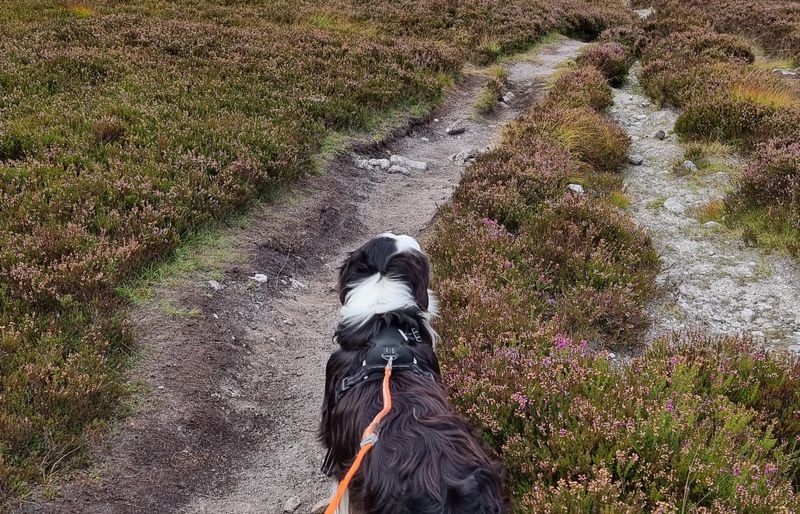
Most of us do not think much about rules when we are out with the dog. We think about mud, coffee and whether the little one has grabbed another stick. Still, the countryside is a working place, and we have found that knowing a few basics keeps your dog, farm animals and wildlife safe.
We are not lawyers, and the detail varies across England, Wales, Scotland and Northern Ireland. For the full picture, read the Countryside Code on gov.uk and check the local council for anything specific to your patch. Here are the main ideas we come back to.
Keep your dog under effective control
The Code asks you to keep your dog under effective control. In practice, that means you can reliably get their attention and call them back, and they stay close enough that you can see what they are up to. It also means you keep them away from places where they might cause harm.
If your dog's recall is still a work in progress, that is completely normal, and ours are no exception. Keep them on a lead, or on a long line in open spaces, while you practise. Our guide to practising recall around other dogs can help.
Livestock: the big one
Sheep, cattle, horses and other farm animals are a farmer's livelihood. Even a friendly dog that just wants to say hello can scare them. Sheep in particular can be frightened into injury, miscarriage or worse, even when the dog never touches them.
That is why our rule is simple. Keep your dog on a lead around livestock, and never let them chase. Farmers are legally allowed to shoot dogs that are worrying their livestock, and a dog that worries sheep can also lead to fines for the owner. It is a horrible outcome for everyone, and entirely avoidable, which is why we are so firm about it.
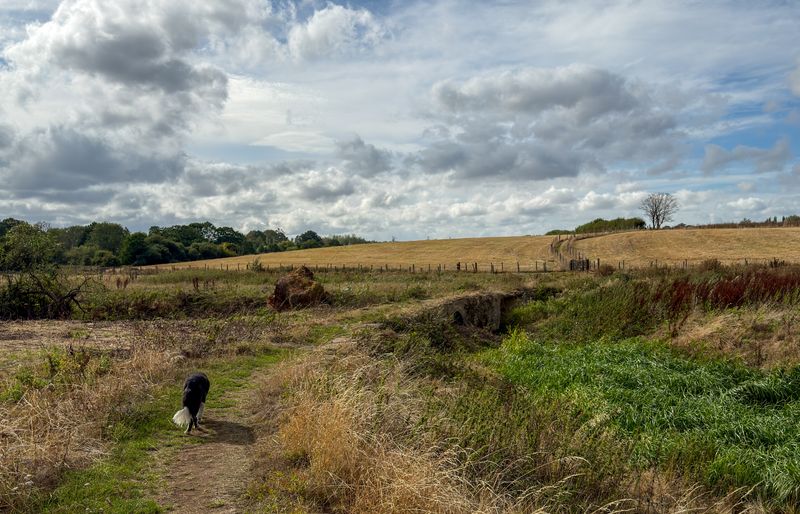
- Look ahead for animals before you open a gate, and have the lead ready.
- Keep to the path and give animals plenty of space.
- Do not let your dog into a field with young lambs, calves or other stock.
- Close gates behind you, unless they are clearly meant to be left open.
- If in doubt, take a different route.
If cattle chase you
Cows with calves can be protective, and herds can be curious. Most of the time they will wander off if you stay calm, but sometimes they approach quickly.
If cattle start to chase, the official advice, and the advice we would give, is to let go of the lead. Your dog can run faster than you and is much better at getting out of trouble on their own. Head calmly but promptly to the nearest safe spot, such as over a gate or fence, and then call your dog from there. Do not try to hold on and keep them close, because that is how people get hurt.
Stay calm and walk away
Do not run, wave your arms or shout. Move steadily away, keeping an eye on the animals.
Let go if chased
If cattle are charging, drop the lead and get to safety. Your dog will usually run clear of them.
Get over the barrier
Use the nearest gate, stile or fence. Keep going until you are on the other side.
Call your dog once safe
Do not go back for them straight away. They will usually find you.
Tell someone
If anyone was hurt or livestock was injured, contact the landowner and, where necessary, the emergency services or your vet.
Wildlife, birds and nesting season
Spring and early summer are busy for ground-nesting birds, and dogs can disturb them without meaning to, ours included. Keep to the paths, stay on the lead where signs ask you to, and give nesting areas a wide berth.
Deer, hares and other wild animals also deserve a quiet life. A dog that chases wildlife can cause real harm and may get lost. If your dog loves to run off after a scent, a lead or long line keeps everyone happy.
Bag it and bin it
We all agree on this one. Pick up after your dog, everywhere, and take it away with you. Dog mess can carry parasites that harm livestock and people, and it is simply unpleasant for the next walker.
Use a bin if there is one. If there is not, take the bag home or to the next bin. Do not leave it hanging in a hedge or on a branch. There is no poo bag fairy, sadly, and we have checked.
Be kind to other people
Not everyone loves dogs, and some people are nervous of them, which we try to remember. Keep your dog off other people unless they have clearly welcomed the attention, and call your dog back around joggers, cyclists, children and horse riders. A quick 'thanks for waiting' goes a long way.
Remember gates, stiles and narrow paths too. Be ready to put your dog on the lead and step aside. Check the signs about whether dogs are welcome on a path at all. Some nature reserves and sensitive sites ask for dogs to be kept away or on a lead.
Leave only footprints, take only photographs, and take the poo bags home with you.
Walking together
Walking with other owners is one of our favourite ways to enjoy the countryside, and a good organiser will mention livestock, terrain and lead requirements in the listing. When you are looking at a walk, check the tags and read the description. You can ask the organiser in chat about stiles, fields and anything else on the route.
If you are planning a walk with a Packmates group, a quick word beforehand about leads and livestock helps everyone feel comfortable, and we always do it. Browse nearby walks or read about the beta. For other hazards you might meet outdoors, see our guide to ticks, adders and algae.