Dark evenings and winter walks: be seen, stay warm
When the clocks go back, the after-work walk is suddenly in the dark. With a bit of kit and planning, winter can be a lovely season for dogs, and we want to help you enjoy it.
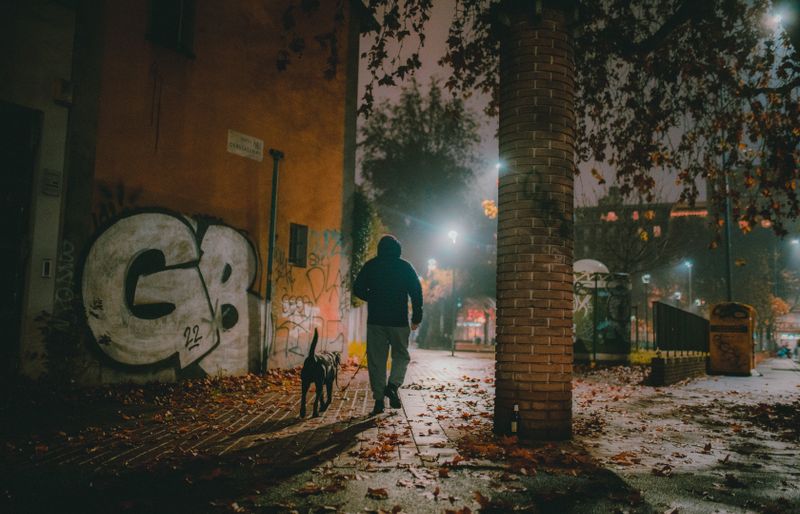
There is a particular kind of gloom that arrives with the end of British Summer Time. You get home, the dog is at the door, and it is already dark outside. We know the feeling. We also know that some of our nicest walks have been on crisp, frosty evenings.
Winter walking is perfectly doable, and dogs often love it. It just asks for a bit more preparation than a June stroll, as our cold fingers can confirm.
Be seen
Drivers, cyclists and other walkers struggle to spot a dark dog on a dark lane. Visibility is the single most helpful thing you can improve, and it is cheap. It is the first thing we sort out each autumn.
- Wear a reflective jacket or a high-vis band, and consider a head torch so you can see the ground and any hazards.
- Put a light on your dog, such as a small clip-on LED or a light-up collar, so you can find them quickly.
- Choose a reflective or bright-coloured lead and harness.
- Make sure your dog is wearing an ID tag with your phone number, and that their microchip details are up to date.
- Keep your dog on a lead near roads. Even a well-trained dog can bolt after a sudden noise in the dark.
If you do let your dog off the lead somewhere safe, check you can still see them. A black dog in a dark field can vanish quickly. Many owners, us included, keep dogs on a long line for winter evenings and save the zoomies for daylight.
Choose lit, familiar routes
In our book, evening is not the time to explore a new woodland trail. Stick to places you know, with streetlights, pavements and other people about. Parks with lit paths, the high street and well-used estates are all good options.
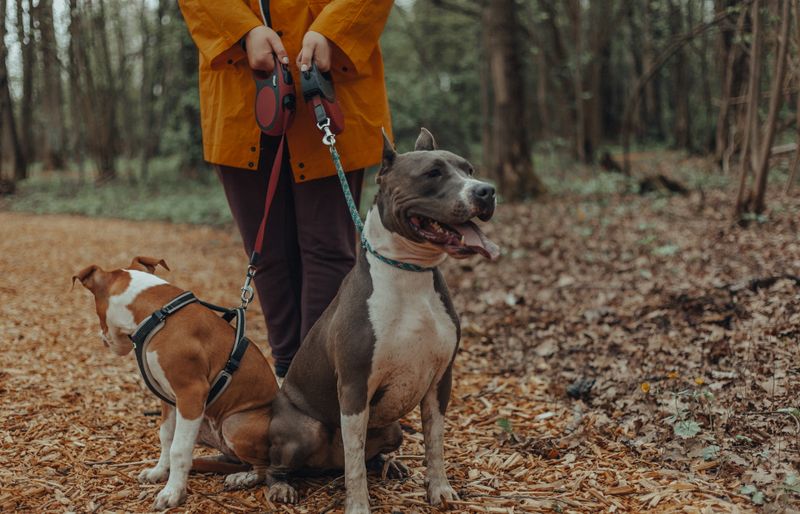
Watch out for slippery leaves, frosty puddles and uneven pavements. A head torch helps with all of those. Also remember that in the dark, wildlife and livestock can be much harder to spot. Follow the signs, and read our guide to the Countryside Code for dog walkers before heading out in the sticks.
Meeting someone new after dark
If you are meeting new walking company in the evening, choose the meeting point with care. Pick a named public place that is lit and has people around, such as a car park by a busy park or the front of a village hall. Tell a friend where you are going, as we always do.
For a first meeting, we would always suggest daytime if you can manage it, and keep evening walks for owners you have already met. Our guide to meeting a stranger for a dog walk safely has a full checklist, and you can report or block anyone in the app if something does not feel right.
Cold weather and your dog
Dogs vary a lot in how they cope with the cold. A thick-coated husky type may love a frosty morning, while a short-haired, slim or elderly dog may feel it quickly. Watch your own dog, as we do with ours: shivering, slowing down, lifting paws or turning for home are all hints.
Some dogs are happier in a well-fitting coat. Puppies, seniors and small dogs often benefit. We are not vets, so if you are not sure, ask your vet.
Antifreeze, salt and grit
Two winter hazards are worth knowing. Antifreeze, which is used in car engines and screenwash, is highly poisonous to dogs and has a sweet taste. Wipe up any spills on a drive or in a garage, keep bottles out of reach and do not let your dog lick puddles near parked cars. If you think your dog may have swallowed any, call your vet immediately.
Road salt and grit can irritate paws and upset tummies if licked off. After a walk on gritted pavements, rinse or wipe your dog's paws and legs with lukewarm water.
Wipe paws and tummy
Use a damp towel after wet or gritted walks. Check between the toes for stones, ice balls and sore patches.
Dry off properly
A towel and a warm spot by the radiator help. Damp, cold dogs are not happy dogs.
Watch the ice
Never let your dog on a frozen pond or lake. Ice that looks solid can break, and rescues are dangerous for dogs and people.
Shorten if needed
On very cold, wet or windy days, two short walks are kinder than one long one.
Check for signs of trouble
Limping, shivering that does not stop, or a very quiet dog after a walk are all reasons to call your vet.
Winter kit checklist
Before you head out
- Reflective jacket or high-vis band for you.
- Head torch or phone torch, with a charged battery.
- A light or reflective strip for your dog.
- A lead and harness in good condition.
- Towel for the car or the back door.
- Poo bags and a small torch to find them in the dark.
- Warm gloves with enough dexterity to deal with a clip.
Do not forget the poo bags. Picking up in the dark is one of the less glamorous parts of winter, but it matters all the same. We think a tiny clip-on torch is worth every penny.
Make it social
Dark evenings are much easier with a walking friend, which is a big reason we built Packmates. You are more likely to bother going out, the dogs enjoy it, and there is someone to chat to when you are standing in a car park in the rain.
On Packmates you can post a walk or ask for company, choose a walk type such as Just a walk or Senior / slow, and agree a lit public meeting point once your requests are approved. Many owners find, and we agree, that having a regular evening plan is the best motivation to put the wellies on.
Wrap up warm, charge the torch, and enjoy the crunch of frosty grass. We will be doing the same. If you would like company, find a walk near you or read how the beta works.