Lead reactivity and why Needs space walks exist
Some dogs are lovely right up until another dog appears on the other side of the path. If that's yours, we have been there, and there is a kind way through.
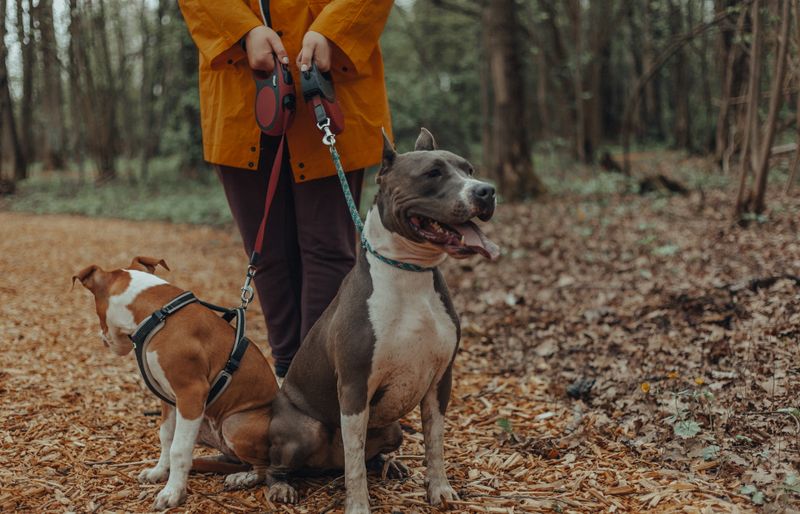
Picture the scene. It is a bright morning, your dog is trotting along happily, and then a stranger with a spaniel appears at the end of the pavement. Your dog barks, lunges, spins and makes a noise like a small foghorn. Your face goes pink. You wonder whether everyone in the street is judging you.
They are probably not, and many of them have had the same morning. We have. A good number of us at Packmates have a dog who finds other dogs tricky on the lead, which is a big part of why Needs space walks exist.
What lead reactivity actually is
"Reactive" is a word owners use for dogs who over-react to something, often other dogs, people, bikes or traffic. On the lead, that tends to look like barking, lunging, growling or dragging you towards (or away from) the trigger.
It is not a verdict on your dog's character, and it isn't always aggression. Many dogs are worried, and feel stuck on a lead with nowhere to go. Some are frustrated because they desperately want to say hello. Others have had a poor experience and are protecting themselves.
We can't tell you the cause for your particular dog, and neither can a blog post. What we can say is that shouting at a dog or yanking the lead tends to make worry worse, and that nothing here replaces advice from someone who has met your dog.
Why distance changes everything
Dogs have a comfortable distance from things that worry them, and the closer the trigger, the harder it gets to think. If you have ever tried to concentrate with someone talking in your ear, you will get the idea.
When we give a dog enough space, the barking often stops without us doing anything else. That's the starting point for most gentle training. Stay far enough away that your dog can notice the other dog, stay relaxed and take a treat from you. Little by little, over weeks and months, that comfortable distance can shrink.
What a Needs space walk is
On Packmates, Needs space is one of the walk types an organiser can choose. It tells everyone up front that this walk keeps plenty of distance between dogs. It's for owners whose dogs prefer room, and for anyone happy to walk that way.
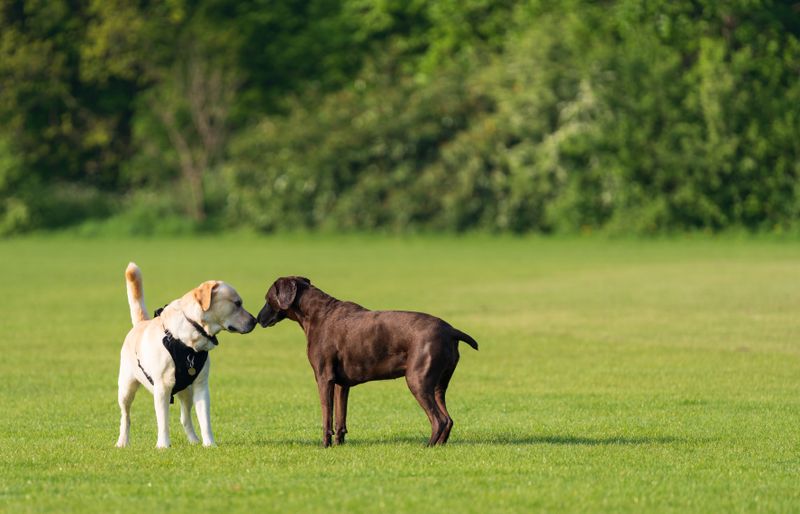
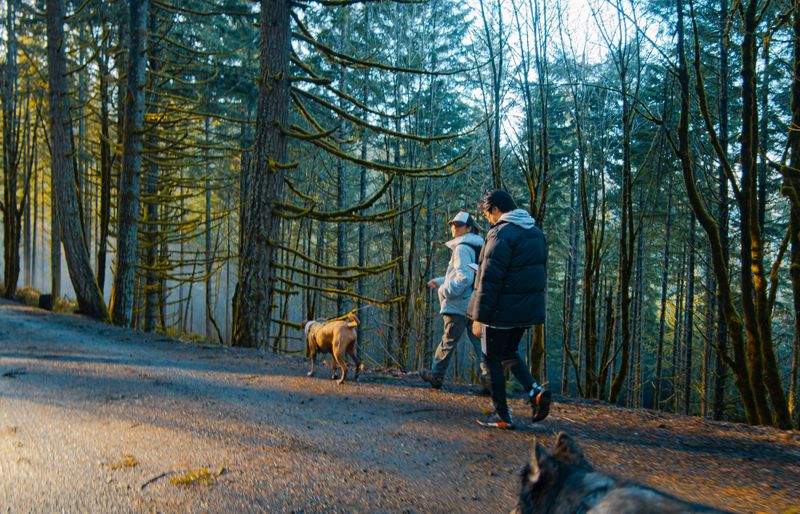
Typically that means a wide path or open space, dogs walking at a respectful distance or in a staggered line, no off-lead dogs charging up, and no pressure for anyone to say hello. A dog who can see other dogs without having to meet them often learns that other dogs are just part of the scenery.
- Walk type
- Needs space
- Helpful tags to look for
- On lead, Slow pace, Calm welcome
- Organiser
- A fellow owner, not a professional or a trainer
- Who decides
- The organiser approves requests, and you always decide what is right for your dog
Because every dog on Packmates has a profile covering size, energy, lead behaviour and comfort around other dogs, organisers can see who is coming before they approve anyone. If a walk might not suit your dog, Packmates will tell you before you ask. It's advice, not a barrier, and the organiser has the final say.
How to ask for a walk well
Honesty is a kindness here. A short, friendly note when you request to join helps the organiser say yes with confidence. It also means nobody is surprised on the day.
What to mention in your request
- How your dog behaves on the lead around other dogs, in plain words.
- The distance they usually cope with, if you know it (for example, across the width of a road).
- What helps: treats, a particular side to walk on, or a bit of warning.
- Whether your dog can cope with dogs behind them, in front of them or both.
- Anything you would like the group to avoid, such as sudden approaches.
Making the walk itself go well
Arrive early and look at the lie of the land
A few minutes to spot where you can step aside helps enormously. Choose a wide spot over a narrow lane.
Start with a gap
Let the other dogs set off first, or walk on the opposite side of a path. Close the gap slowly, or not at all.
Reward early and often
Treats for calm noticing, little and often. If your dog can't take food, they may be over their limit, so add more space.
Keep the lead loose
A tight lead can feel like being trapped. A comfortable harness or collar and a loose lead make breathing easier for both of you.
Call it early
If your dog is struggling, calmly turn away and increase distance. Cutting a walk short is a good plan, not a failure.
What not to do
- Do not let strange dogs rush over to say hello. Even a friendly dog can be a big problem for a worried one.
- Do not punish growling or barking. It is information, and a dog who stops warning may skip to something worse.
- Do not use choke chains, prong collars or shock collars. They can make fear worse, and we would never recommend them.
- Do not force a "proper greeting" to get it over with. Calm, successful sightings are worth more.
If you are not sure how your dog is feeling, our guide to reading dog body language on a group walk can help you spot the early signs.
Being a good walking friend to a reactive dog
If you are on the other side of this, with a relaxed dog walking alongside a dog who needs space, you can make a real difference. Keep your dog on a lead near theirs, don't let yours rush forward, and resist the urge to say "oh, but he is friendly!". A simple "no problem, we will give you room" is a gift.
I'd stopped walking at busy times because I dreaded it. A small Needs space walk with two other owners gave me my confidence back, one wide field at a time.
Take your time and celebrate the small wins, like a glance at a dog and a turn back to you. When you're ready, browse walks near you and look for the Needs space type. If you are heading to a first walk, our etiquette guide covers the basics, and the Dogs Trust has general advice on living with a worried dog.