Your dog's profile: size, energy and lead manners
Your dog's profile is the first thing an organiser reads about them. A few honest minutes filling it in saves a lot of awkward moments in car parks.
Most of us think our dogs are marvellous. We certainly do. They are also individuals with opinions, and some of those opinions are strong ones about spaniels, bicycles or anyone who approaches too quickly.
That is why we ask for a profile for every dog on Packmates. It is not a show-and-tell, and nobody is marking it. It is a quick way for an organiser to picture who is coming and decide whether the walk is likely to go well for everybody. We have all stood at a meeting point wishing we had known a little more beforehand.
What the profile covers
Each dog has four main details. Here is what we are really asking with each one.
- Size
- How big your dog is, which matters for rough-and-tumble play and for how dogs meet.
- Energy
- How much exercise and excitement your dog usually wants on a walk.
- Lead behaviour
- How your dog behaves on the lead: a calm walker, a puller, or somewhere in between.
- Comfort around other dogs
- How relaxed your dog is when meeting or passing other dogs.
Take them one at a time, and answer for the dog you have, rather than the dog you hope you have.
Size: more than a number on the scales
Size matters because of how dogs interact. A very small dog can feel overwhelmed by a bounding giant, even a friendly one. A large, gentle dog may need space around smaller dogs to avoid accidents. Neither is a flaw, just something worth knowing before a first hello.
If your dog is somewhere between categories, pick the one that feels closest and use your own words in a walk request to fill in the gaps.
Energy: the honest bit
This is the one we find people most often get wrong, and we say that with love. A young collie cross who has been "calm all week" is probably not calm; she has just been waiting for a walk. We have lived with that dog.
Think about how your dog behaves on a typical walk, not on a good day or a bad day. Do they need a long, brisk outing to settle? Do they potter and sniff? Are they happy to stop and wait while others catch up? Matching energy levels is half of what makes a walk with company feel easy.
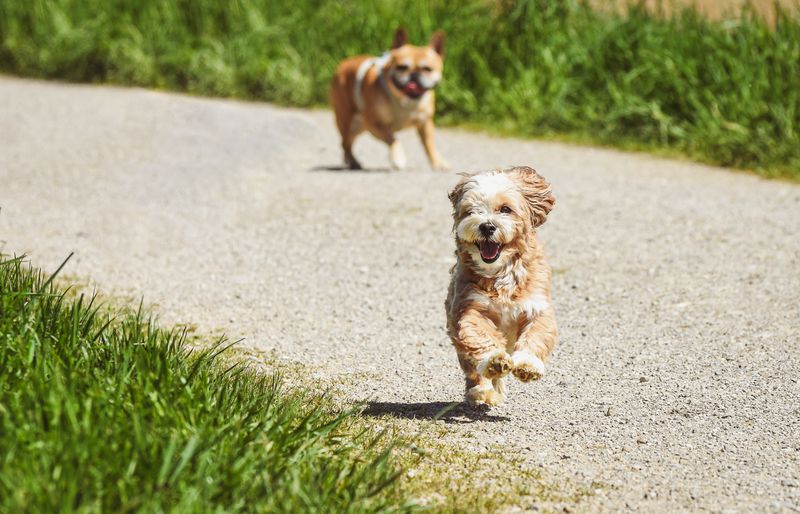
Lead behaviour: say it plainly
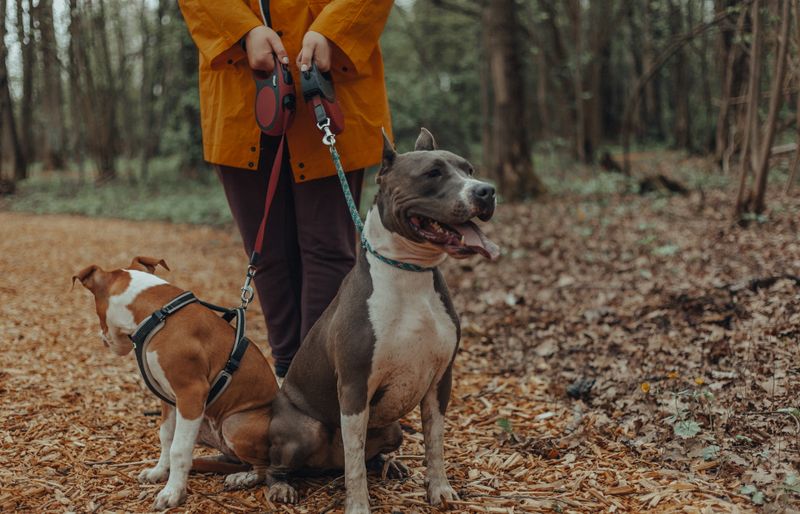
Nobody has a perfect loose lead, and that includes us. If your dog pulls, say so. If they're brilliant until they spot a squirrel, say that. Organisers will not think any less of you. A pulling dog and a fast walker may suit each other very well, and a very sedate group may not want to go at that pace.
If your dog is learning, consider a Training walk. Practising lead manners alongside other owners is exactly what that walk type is for, and you'll find plenty of people in the same boat, us included.
Comfort around other dogs: the most important one
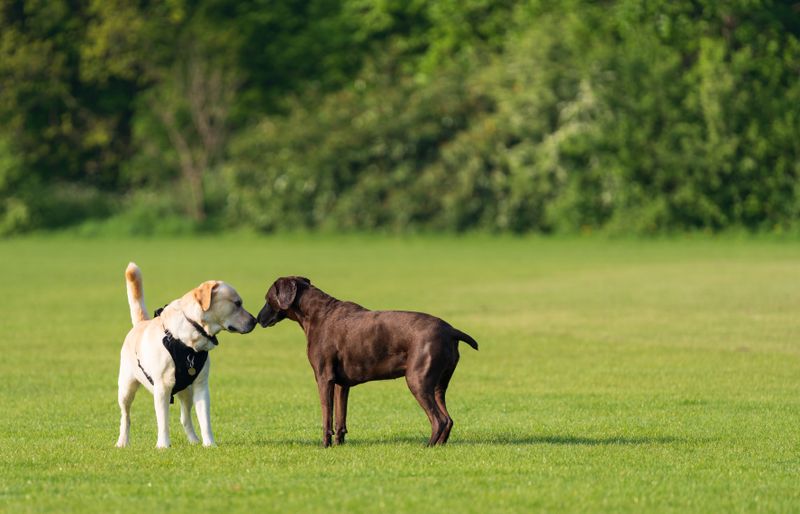
This detail does the most work, and honesty here makes the biggest difference. Dogs fall along a wide spectrum. Some love every dog they meet. Some are friendly with a slow introduction. Some are worried, selective or simply prefer humans, and we think they all deserve good walks.
If your dog has had a difficult encounter in the past, or is still learning to cope, that is worth being open about. Better to find a calm, spacious walk than to hope for the best at a busy meeting point.
Why this helps you, not just them
When you ask to join a walk, you choose which dogs you would bring, and the organiser sees their profiles. If a walk may not suit one of your dogs, we tell you before you send your request. It is advice, not a locked door, and the organiser has the final say either way.
So an accurate profile means fewer awkward declines, fewer mismatched walks and a better chance of meeting the sort of owners you really get on with. If you want to see how organisers think about it from their side, read our piece on writing a walk listing people say yes to.
Updating the profile as your dog changes
Dogs change, and ours certainly have. Puppies grow, adolescents go through phases that test the patience of saints, and older dogs slow down. Revisit the profile every so often, particularly after a big change such as training progress, an injury or a move. If you have a health concern about your dog, your vet is the right person to ask.
- A puppy might move from lively to merely enthusiastic after some training.
- A rescue dog might grow more confident after a few months in a settled home.
- A senior dog might need a slower pace than last year.
- A dog recovering from illness or injury might need shorter, quieter walks for a while.
Several dogs, several profiles
If you have more than one dog, each gets their own profile. That matters, because two dogs in one household can be quite different. One may be the social butterfly while the other is a bit more reserved. When you request a walk you pick the dogs you'll bring, so you aren't forced to take everyone every time.
Before you save a profile
- I picked the size that feels closest to my dog.
- I described energy as it is on a normal walk, not a quiet one.
- I was straight about lead behaviour, including pulling.
- I was honest about how my dog feels around other dogs.
- I know that the organiser, not the app, decides who joins.
You know your dog better than anyone. We built the profile as a way of passing that knowledge on in a friendly, useful form. Once it's done, we would love you to take a look at how Packmates works from start to finish and find your first walk.